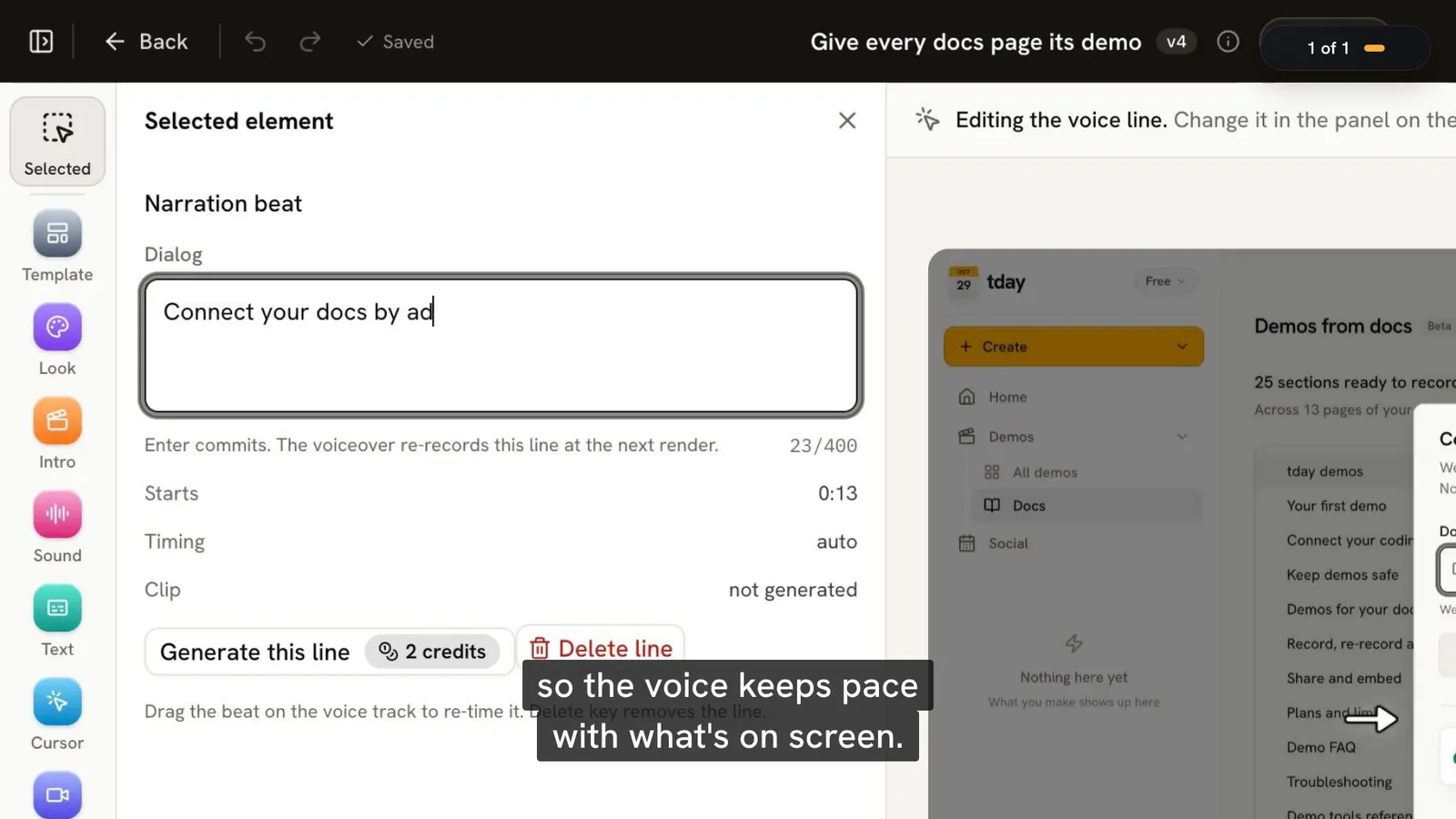
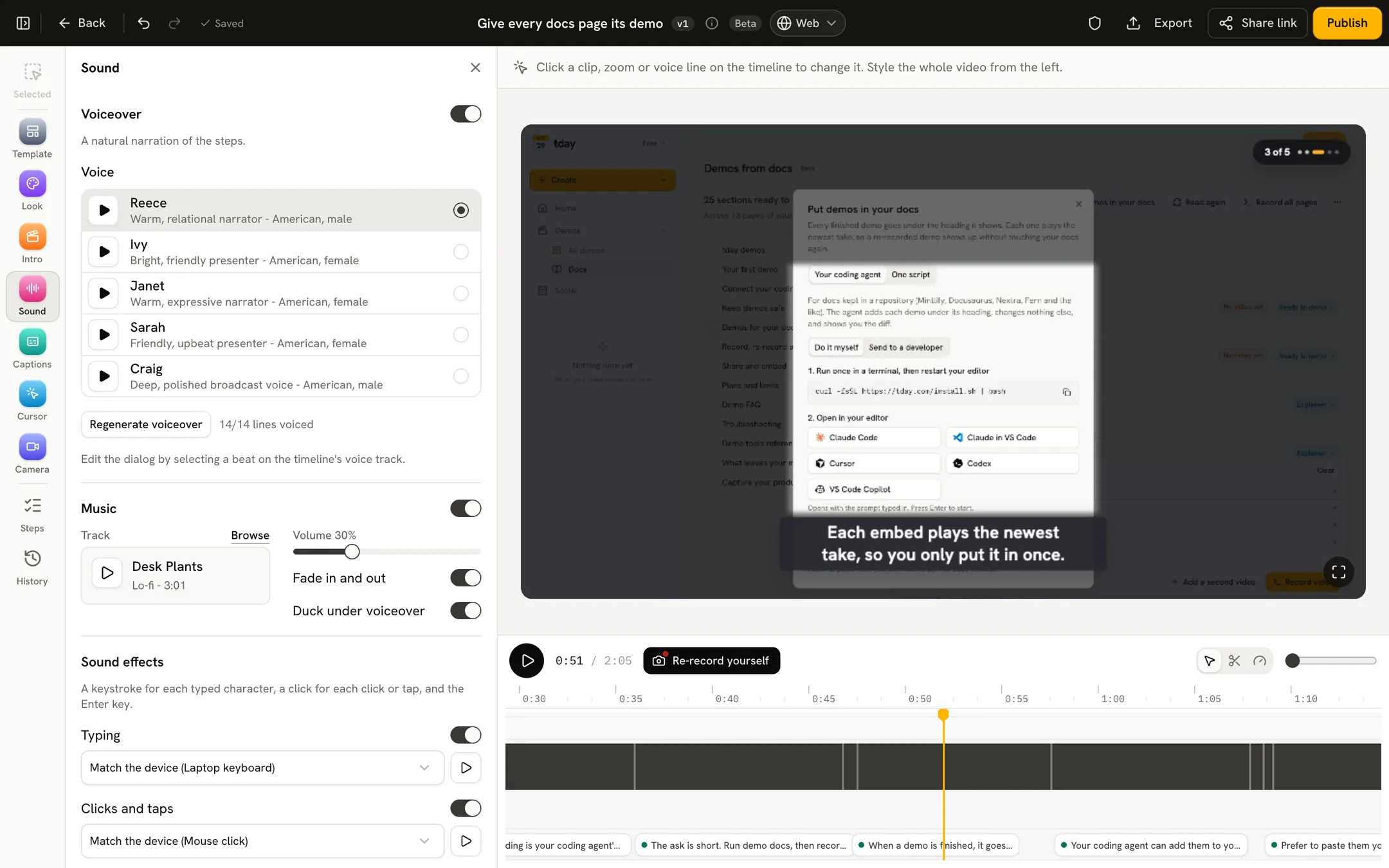
tday vs Storylane: a demo for your docs or a demo for your buyers?
Storylane makes click-through demos for sales teams. tday makes narrated videos your coding agent records. Features and prices as of November 10, 2026.
By the tday team Published 6 min read
The short answer
Storylane makes interactive demos: a captured copy of your product that a buyer clicks through, with lead forms and CRM sync for a sales team. tday makes narrated demo videos: your coding agent records the app running from its repo, and viewers watch. As of November 2026, Storylane is free for 1 published demo, Starter is $50 a month for one seat, and Growth is $625 a month. tday is free for 5 saved demos, and Pro is $39 a month for 2 seats.
Key takeaways
- A Storylane demo is clicked through by a buyer. A tday demo is watched. They are different kinds of thing, so pick by what the viewer came to do.
- Storylane is built for selling: lead forms on the free plan, account reveal on Starter, deal rooms and Salesforce on Premium. tday has none of that.
- A Storylane demo is captured by a person in a browser or its desktop app. A tday demo is recorded by your coding agent, from the app running on a developer's machine.
- Storylane's HTML demos, which you can edit after capture, start on Growth at $625 a month, or $500 billed yearly.
- Neither updates a demo on its own when you ship. In Storylane you recapture the screens that changed. In tday you ask your agent to record again.
Accurate as of . Every fact about Storylane was read from its own website that day, and each page is listed under Sources. Prices and plans change, so check the vendor's page before you buy. tday publishes this blog and makes one of the two products compared.
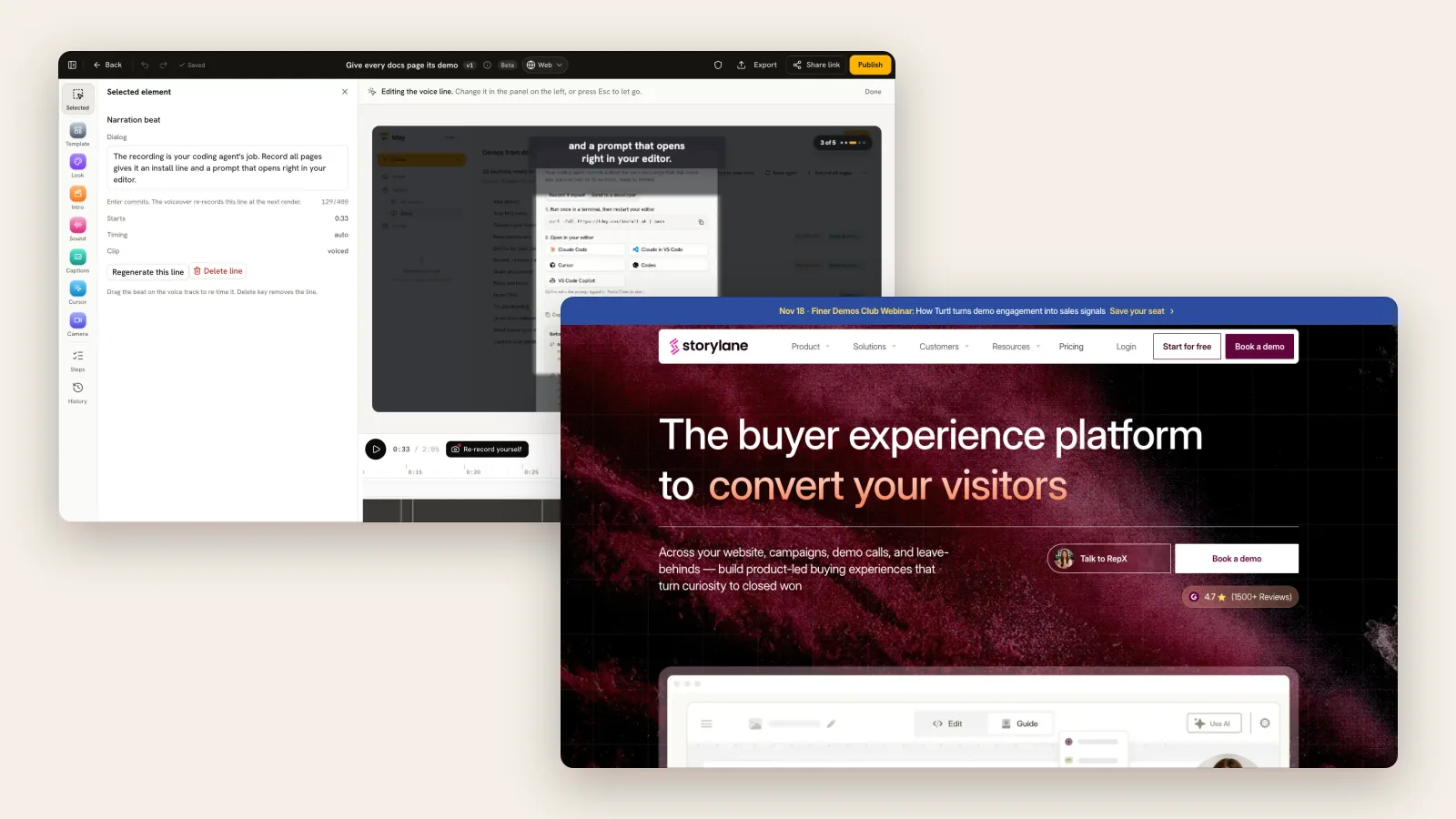
Storylane and tday both show your product to someone who is not using it yet. That is about all they share. Storylane hands a buyer a copy of the product to click through, and tells your sales team who clicked. tday gives a reader a short narrated video of the feature being used.
So the choice is rarely close. It depends on who the demo is for, and on who in your company makes it.
tday vs Storylane at a glance
| tday | Storylane | |
|---|---|---|
| What it makes | A narrated demo video | A click-through interactive demo |
| What the viewer does | Watches | Clicks through, screen by screen |
| How it is captured | Your coding agent records the app running from its repo | A person records a flow in the browser or the desktop app |
| Who it is built for | Developers, for docs and feature demos | Sales and marketing teams |
| Voice | An AI voice for every line | AI voiceover on every plan, using AI credits |
| Coding agent | Records the demo | Builds a demo from images, a video or a URL through an MCP server, on Starter and up |
| When the UI changes | You ask the agent to record again, under the same link | Recapture the screens that changed, or edit the captured HTML |
| Free plan | 5 saved demos and 100 credits a month, with a tday badge | 1 published demo and 200 AI credits, with a watermark |
| Paid from | Pro $39 a month | Starter $50 a month ($40 billed yearly) |

Where Storylane is the better choice
A demo the buyer can try. tday does not make interactive demos. If you want a prospect on your pricing page to click around the product, Storylane is the right kind of tool and tday is not.
Selling. Lead forms and basic analytics are on Storylane's free plan. Starter adds HubSpot and account reveal for 250 visitors a month. Premium adds deal-room Hubs and Salesforce. tday has no lead capture and no CRM connection.
No repo, no developer. A marketer can capture a Storylane demo in a browser, or with its desktop app on Mac and Windows. tday needs a coding agent on a developer's machine and the app running from its repo, except on Enterprise, where it can record in the cloud.
Changing what the demo shows. An HTML demo is a copy of the page, so you can change a name, a number or a logo after capture, with search and replace across the demo. That starts on Growth. A tday demo is a recording: to change what is on screen, the agent records again.
Guides from the same capture. Storylane exports GIFs, PDFs and documents on every plan, and MP4 on Starter and up.
Where tday is the better choice
Explaining, not exploring. In docs or a changelog, the reader wants to see how something is done and get back to work. A narrated video shows the whole flow, with captions and camera moves, and asks for no clicks.
Nobody captures it. A Storylane demo starts with a person clicking through the flow. (Through its MCP server, an assistant can also build one from images, a video or a URL.) With tday you ask Claude Code, Cursor or Codex, and it starts a separate copy of the app with throwaway data, records one narrated line at a time, checks the take for secrets and uploads it.
More than a browser tab. tday records web apps, Electron apps, terminal tools, iPhone apps in the iOS Simulator, Android apps on the emulator, and a Mac app's own window.
A demo per docs page. tday reads your docs, marks the sections that show something being done in the app, and your agent records one demo per page.
Keeping demos current
Neither tool does this without you.
Storylane's sandbox page says you "recapture the screens that changed rather than rebuilding the demo". In an HTML demo you can also fix the text in place. We found nothing on Storylane's site about rebuilding demos from staging when you deploy.
tday does not record on a push or a merge either. You ask your agent to record the demo again, and the new take becomes a new version of the same demo, so the share link and every embed play it. On Pro and above, a Needs update tab lists the demos a merged pull request or a docs edit may have put out of date. The recording is still a request you make.
What each one costs
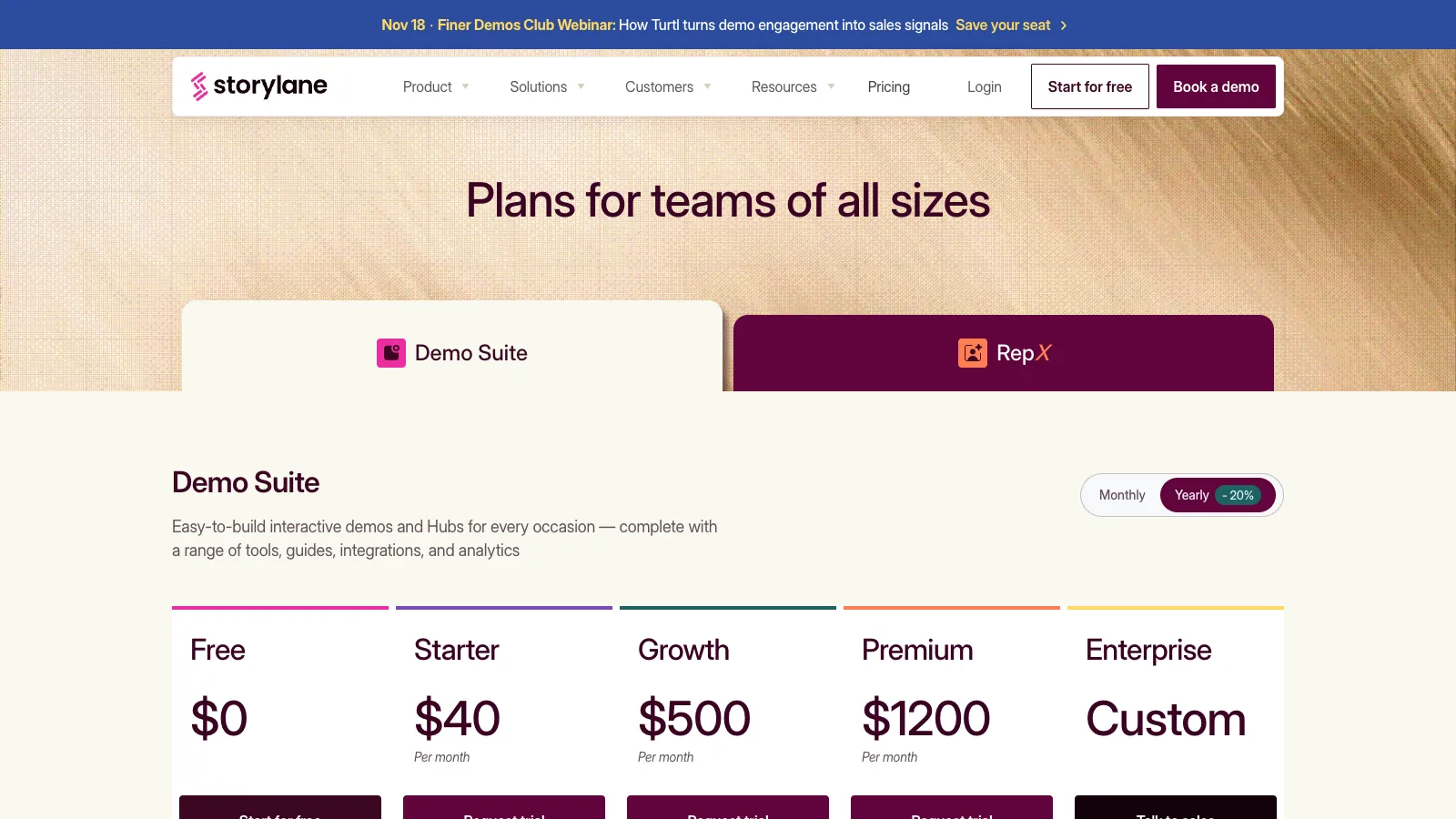
Storylane's Demo Suite has a free plan and four paid ones. Free covers 1 seat, 1 published demo and 200 AI credits, with a watermark. Starter is $50 a month, or $40 billed yearly, with one seat, and extra seats are listed at $40 each. Growth is $625 a month, or $500 billed yearly, with 5 seats and 10,000 AI credits, and is where HTML demos start. Premium is $1,500, or $1,200 billed yearly, with 10 seats. Enterprise is custom. Its RepX agent is priced separately.
tday charges per plan. Free includes 5 saved demos and 100 credits a month, which is 10 minutes of voiceover, with a tday badge. Pro is $39 a month for 2 seats, 25 saved demos and 500 credits. Growth is $149 for 3 seats and 150 demos. Recording and rendering use no credits.
The two price lists do not buy the same thing, so the cheaper one is not the point. Storylane's price buys a sales tool. tday's buys videos.
Which should you pick
For a sales page, an outbound email or a deal, use Storylane. A buyer who can click around learns what the product feels like, and your team learns who they were.
For docs, changelogs and feature demos in a team whose app runs from a repo with a coding agent, tday fits. If no developer is going to be involved, it does not.
They overlap very little, so a company with both a sales team and a docs site may end up using each for its own job.
Frequently asked questions
Is tday a Storylane alternative?
Only for some jobs. If you want narrated videos for docs and changelogs, recorded by your coding agent, tday does that. If you want click-through demos with lead capture and CRM sync for a sales team, Storylane is the right kind of tool and tday is not: it makes videos, not interactive tours.
How much does Storylane cost?
As of November 10, 2026 Storylane's Demo Suite is free for 1 published demo with a watermark. Starter is $50 a month, or $40 billed yearly, for one seat. Growth is $625 a month, or $500 billed yearly, for 5 seats. Premium is $1,500 a month, or $1,200 billed yearly, for 10 seats. Enterprise is custom.
Does Storylane update demos automatically when the product changes?
No. As of November 10, 2026 Storylane's site says you recapture the screens that changed, and that HTML demos can be edited in place. We found nothing on its site about a rebuild triggered by a deploy. tday does not record on a push or merge either: you ask your coding agent to record the demo again.
Can a coding agent make a Storylane demo?
An assistant can build one from material you give it. Storylane's MCP server, on Starter and up, turns images, a video or a URL into a demo. With tday, the coding agent does the recording itself, from the app running on your machine.
More comparisons
tday vs Loom
Loom records you explaining something. tday has your coding agent record the product. What each is for, its limits and its price, as of November 10, 2026.tday vs Screen Studio
Screen Studio polishes a recording you make on a Mac. tday has your coding agent make the recording. Features, limits and prices as of November 10, 2026.tday vs Tella
Tella is a studio for videos you present. Its agent films web apps on public domains. With tday, your coding agent films localhost too. November 10, 2026.tday vs Arcade
Arcade now sells AI video for marketing teams, with interactive demos priced separately. tday records your real app. What each costs as of November 10, 2026.tday vs Supademo
Supademo makes click-through demos from screenshots. tday makes narrated videos your coding agent records. Features and prices as of November 10, 2026.Supademo vs Storylane
Both make click-through demos from $50 a month. Supademo gives more for free. Storylane is built for sales teams. Plans and limits as of November 10, 2026.Arcade vs Storylane
Arcade charges per seat and has turned to AI video. Storylane charges per plan and sells to sales teams. Prices and limits as of November 10, 2026.Loom vs Screen Studio
Loom gets a link to a teammate in seconds. Screen Studio makes a recording look produced. Platforms, features and prices compared as of November 10, 2026.Screen Studio vs Tella
Screen Studio polishes one recording on a Mac. Tella builds a video from clips on Mac, Windows or the web, and hosts it. Compared as of November 10, 2026.Loom vs Tella
Loom is for quick videos to people you work with, and has a free plan. Tella is for videos you publish, with automatic zoom. Compared as of November 10, 2026.Arcade vs Supademo
Both sell interactive demos at $50 a seat. Arcade has since turned to AI video. Supademo gives more for free. Plans and limits as of November 10, 2026.


Or see all of them at once: The best demo video tools for developer-led startups in 2026, compared.
Sources
- Storylane plans, Storylane
- Recording HTML demos, Storylane
- Editing HTML screens, Storylane
- AI demo creation, Storylane
- Storylane MCP overview, Storylane
- Storylane MCP demo tools, Storylane
- Sandbox demos, Storylane
- Storylane desktop app, Storylane
- tday demos, tday docs
- Demos for your docs, tday docs
- Record, re-record and edit, tday docs
- Share and embed, tday docs
- tday plans and limits, tday docs
Have your coding agent record your first demo
One prompt in Claude Code, Cursor or Codex records a narrated demo of your app. tday voices, styles and renders it, ready for your docs. Free includes 5 saved demos.